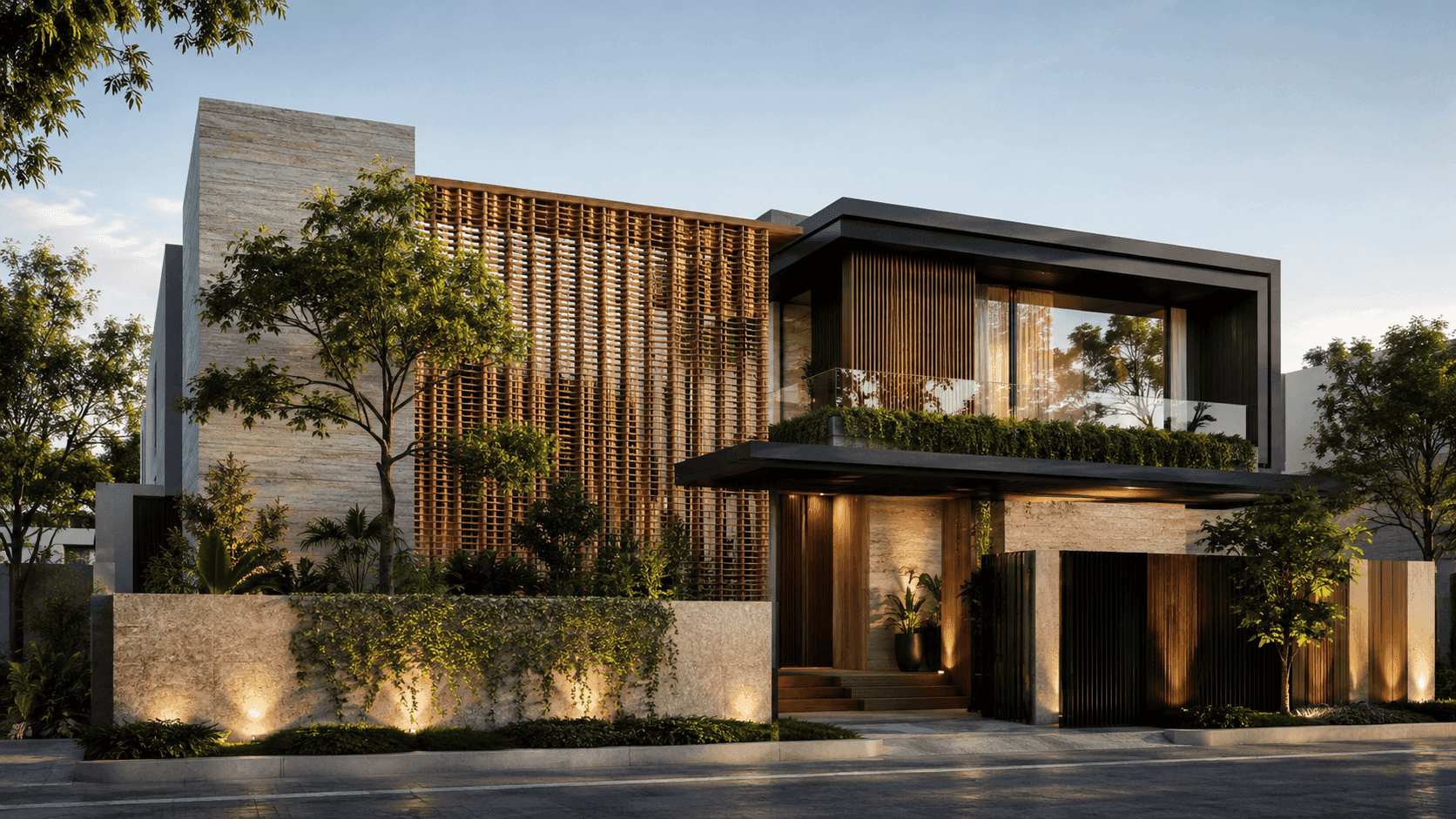
Sustainable Homes Are No Longer a Niche Request
Sustainable homes have moved from a specialist conversation into the center of luxury residential design. Homeowners want healthier materials, lower operating costs, quieter interiors, better daylight, and resilient construction. In the United States, this is especially important because climate, energy codes, wildfire risk, stormwater, and comfort expectations vary dramatically by region.
Lunarch Studio treats sustainability as a design framework rather than a checklist. Sustainable residential architects should shape the orientation, massing, facade ideas, building materials, insulation strategy, ventilation, and landscape response before aesthetic decisions become fixed. When these choices happen early, sustainability supports beauty instead of limiting it.
Passive performance comes first
Before adding smart homes technology, solar panels, or high-performance equipment, the building itself should work harder. Shading, window placement, thermal mass, roof overhangs, cross ventilation, and compact planning can reduce energy demand while improving comfort. This is where architecture inspiration often comes from the site itself: sun path, wind, topography, trees, and neighboring structures.
A full-service architecture and design firm can test these decisions through architectural visualization, BIM analysis, and consultant coordination. The earlier the team understands performance goals, the easier it is to align design ambition with construction planning and budget.
Materials Shape Experience and Longevity
Building materials are one of the most visible parts of sustainable design, but they should be evaluated beyond appearance. Durability, maintenance, embodied carbon, local availability, repairability, and indoor air quality all matter. Natural stone, responsibly sourced wood, low-VOC finishes, recycled metal, high-performance glazing, and long-life roofing systems can all contribute to a better home when specified correctly.
For luxury homes, sustainable materials should not feel like compromise. They should feel substantial, timeless, and connected to the architecture. Lunarch Studio often recommends palettes that age gracefully: textured masonry, warm wood, mineral surfaces, shaded glass, and exterior materials that gain character over time.
Avoiding greenwashing
Not every “eco” material is right for every project. A material shipped across the world may not be more sustainable than a local option with a slightly higher published footprint. A product that requires frequent replacement can undermine its initial benefits. Sustainable residential architects must evaluate the whole lifecycle, not just a label.
Sustainability Adds Long-Term Value
For clients seeking the best residential architect for luxury homes, sustainability is increasingly tied to value. A well-planned home can reduce utility costs, improve comfort, support wellness, and maintain relevance as expectations change. It can also make future renovations easier because systems, structure, and spaces are more thoughtfully organized.
Lunarch Studio believes sustainable homes are part of the future of architecture because they align environmental responsibility with better living. The best architects for custom homes will not treat sustainability as an add-on; they will make it part of the concept.
For facade-focused material strategies, continue to Facade Ideas and Building Materials for Contemporary Homes.